Introduction
Aging at home doesn’t mean settling for less care anymore. Future healthcare technology changes that by bringing hospital-level monitoring right to your doorstep. It keeps seniors safe, independent, and connected to doctors without constant trips. Discover how these innovations make at-home care smarter and more reliable today. Home page
9 Innovative Home Health Care Technologies

Future healthcare technology shines through tools that fit seamlessly into daily life. These innovations tackle real problems like isolation, forgotten meds, and sudden falls. They empower seniors to thrive at home while giving families peace of mind.
Remote patient monitoring systems
Remote patient monitoring systems track vitals like heart rate and blood pressure around the clock. You wear a simple sensor or place it on a scale—it sends data straight to your doctor. This catches issues early, preventing emergencies. For chronic disease home management, it’s a game-changer.
AI-powered diagnostic tools
AI-powered diagnostic tools analyze patterns in your health data fast. They spot trends humans might miss, like irregular sleep signaling heart trouble. Doctors use these insights to adjust treatments quickly. AI in home healthcare boosts accuracy without replacing expert care.
Smart home health devices
Smart home health devices turn everyday items into health allies. Think thermostats that detect breathing changes or lights that dim for better sleep. They create a safer space for elderly home care technology. No big changes needed—just plug and protect.
Virtual reality therapy
Virtual reality therapy makes rehab fun and effective at home. Put on a headset, and you’re balancing on a virtual beach or stretching in a game. It builds strength and mobility faster than boring exercises. Great for post-surgery recovery in aging in place solutions.
Wearables and IoT devices
Wearables and smart tech features like smartwatches monitor steps, falls, and oxygen levels. They alert you or family if something’s off. BI analytics in these devices predict risks early. Perfect for the best wearables for remote monitoring.
Home robotic assistants
Home robotic assistants help with meds, reminders, and even light chores. They roll around, chat, and call for help if needed. Robotics reduce caregiver burnout while supporting senior independent living support. They’re not sci-fi—they’re here now.
AI chat systems for seniors
AI chat systems for seniors answer questions anytime, like “Did I take my pill?” They explain symptoms simply and triage urgencies. No more waiting on hold. AI chatbots for health questions build confidence safely.
Predictive analytics tools
Predictive analytics tools crunch data to forecast health dips. They warn of infections or fatigue before you feel it. This proactive edge cuts hospital stays. Essential for predictive health analytics in home-based medical care trends.
Nanotech and bioprinting devices
Nanotech and bioprinting devices are emerging stars—they deliver targeted drugs or print skin grafts at home. Still early, but they promise wound healing without clinics. Future healthcare tech like this redefines recovery.
What is At-Home Care
At-home care lets seniors stay in their familiar surroundings with medical support tailored to them. Nurses visit, tech monitors, and families stay involved— all without uprooting life. It focuses on comfort, dignity, and preventing bigger issues. Unlike facilities, it adapts to your routine.
This model exploded post-pandemic as telehealth services for seniors proved reliable. Now, continuous health tracking systems make it proactive. You get personalized care that feels natural, not institutional.
The Future of Advanced Technology in Home Health Care
Future healthcare technology accelerates with smarter, faster tools. It shifts care from reactive fixes to everyday prevention. Seniors gain independence; providers gain data.
AI and machine learning advancements
AI and machine learning advancements learn from your patterns to personalize advice. They evolve with you, suggesting diet tweaks or exercise based on real data. This makes healthcare digital transformation feel intuitive.
Telemedicine and remote monitoring
Telemedicine and remote monitoring connect you to doctors via video anytime. No travel, less stress. RPM healthcare systems ensure nothing slips through.
Robotics and automation
Robotics and automation handle repetitive tasks, freeing humans for empathy. They assist mobility and monitor quietly.
5G-enabled real-time care
5G-enabled real-time care streams HD video and data instantly. Rural folks get urban-level support. It bridges gaps in connected healthcare ecosystems.
How Future Healthcare Technology Is Elevating At-Home Care in the United States

Future healthcare technology transforms U.S. homes into safe havens. It cuts costs and boosts outcomes amid rising senior populations.
Benefits of Tech-Driven At-Home Care
Improved patient outcomes
Improved patient outcomes come from early alerts—think spotting dehydration before hospitalization.
Cost savings for families
Cost savings for families hit big: fewer ER runs mean thousands saved yearly. Benefits of RPM in home care add up fast.
Enhanced accessibility in rural USA
Enhanced accessibility in rural USA reaches isolated areas via satellite-linked devices.
Reduced hospital readmissions
Reduced hospital readmissions drop 30% with steady monitoring.
Real-World Examples in the USA
Leading telehealth platforms
Leading telehealth platforms like Teladoc serve millions daily. Telehealth for aging Americans prevents delays.
Wearable success stories
Wearable success stories abound—Apple Watch saved lives via fall detection.
Case studies from major providers
Case studies from major providers like UnitedHealth show 20% better chronic illness monitoring tools results.
AI in Home Healthcare: Support, Not Replacement
AI in home healthcare spots risks fast but leaves decisions to doctors. It crunches data so pros focus on you. Imagine it as a sharp assistant, not the boss. This balance builds trust.
Providers love it—fewer false alarms, more time for care. Patients feel watched over without intrusion. AI healthcare diagnostics evolve daily, making support smarter.
How AI Chat Systems Help Seniors Ask Questions Safely
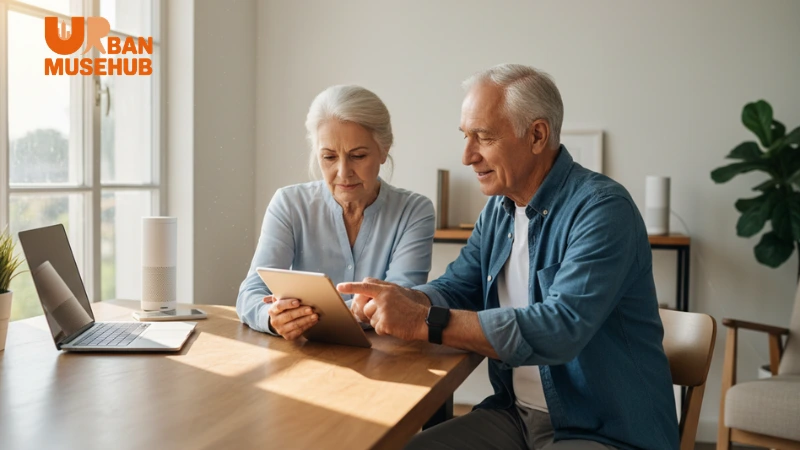
AI chat systems let seniors query “Is this chest pain serious?” anytime. They guide safely, escalating to humans when needed. No embarrassment, just clarity.
These tools reduce calls by 40% while catching issues early. AI in home healthcare for seniors feels like a patient friend.
What Aging Americans Should Look for in Home Care Technology
Pick tech that fits your life, not overwhelms it. Look for intuitive designs that grow with needs.
Key features to evaluate
Key features to evaluate include auto-updates and easy setups.
Compatibility with Medicare
Compatibility with Medicare ensures coverage—check Medicare coverage for telehealth 2026 plans.
User-friendly interfaces
User-friendly interfaces use voice commands for non-techies.
Reliability and accuracy
Reliability and accuracy prevent false scares—vet FDA approvals.
Common Mistakes Families Still Make
Families often buy flashy gadgets without testing usability. They skip tutorials, leading to abandonment.
Ignoring privacy settings
Ignoring privacy settings exposes data—always lock it down.
Overlooking training needs
Overlooking training needs frustrates users—practice first.
Skipping insurance checks
Skipping insurance checks wastes money—verify reimbursements.
Buying incompatible devices
Buying incompatible devices creates silos—choose ecosystems.
How Technology Integrates into Daily Home Care
Tech blends into routines like coffee brewing. It hums quietly, alerting only when needed.
Setting up smart health ecosystems
Setting up smart health ecosystems starts with a hub linking all devices. IoT integration simplifies it.
Daily monitoring routines
Daily monitoring routines track sleep and activity passively.
Data sharing with healthcare pros
Data sharing with healthcare pros happens securely via apps.
Emergency response features
Emergency response features auto-call 911 on falls.
Challenges and Solutions
Barriers exist, but fixes empower adoption. Face them head-on for smooth sailing.
Privacy and data security
Privacy and data security improve with end-to-end encryption.
Digital divide issues
Digital divide issues fade with simple, offline-capable devices.
Regulatory hurdles in USA
Regulatory hurdles in USA ease via FDA fast-tracks.
Adoption barriers for seniors
Adoption barriers for seniors drop with family demos.
Future Trends Shaping At-Home Care
Tomorrow’s tools predict and prevent like never before. Get ready for hyper-personalized care.
Personalized medicine via genomics
Personalized medicine via genomics tailors treatments to your DNA.
Predictive analytics for prevention
Data intelligence in predictive analytics for prevention flags risks weeks ahead. Future trends in home health tech excite.
Getting Started with At-Home Tech
Start small—pick one device, master it, expand. Consult pros for fits.
Choosing the right devices
Choosing the right devices matches your needs, like diabetes-focused RPM.
Integrating with insurance plans
Integrating with insurance plans maximizes Medicare perks.
Training family caregivers
Training family caregivers via apps builds confidence.
Consulting USA healthcare providers
Consulting USA healthcare providers ensures safe rollout.
Frequently Asked Questions
What are the best wearables for at-home monitoring?
The best wearables for at-home monitoring include Apple Watch for falls and Fitbit for sleep. They sync with apps for doctor reviews.
How does Medicare cover telehealth in 2026?
Medicare covers telehealth in 2026 for rural and chronic patients—up to 150 visits yearly. Check eligibility annually.
Is at-home AI diagnosis reliable?
At-home AI diagnosis is reliable for screening but confirms with doctors. Accuracy hits 90%+ for basics like arrhythmias.
What privacy laws protect home health data?
HIPAA and state laws protect home health data—demand encrypted platforms.
Can robotics fully replace nurses?
Robotics can’t fully replace nurses—they handle empathy and complex care best.
How to Set Up a Smart Home for Senior Care
Set up a smart home for elderly care with hubs, sensors, and voice controls. Test weekly.
What are top USA telehealth apps?
Top USA telehealth apps: Teladoc, Amwell, Doctor on Demand—user-friendly for seniors.
Will 5G change at-home care access?
Yes, 5G boosts at-home care access with lag-free video and data.
How accurate are remote vital sign trackers?
Remote vital sign trackers hit 95% accuracy for heart rate, less for blood pressure.
What future tech will dominate home care?
Future tech like genomics and nanobots will dominate, per experts.